
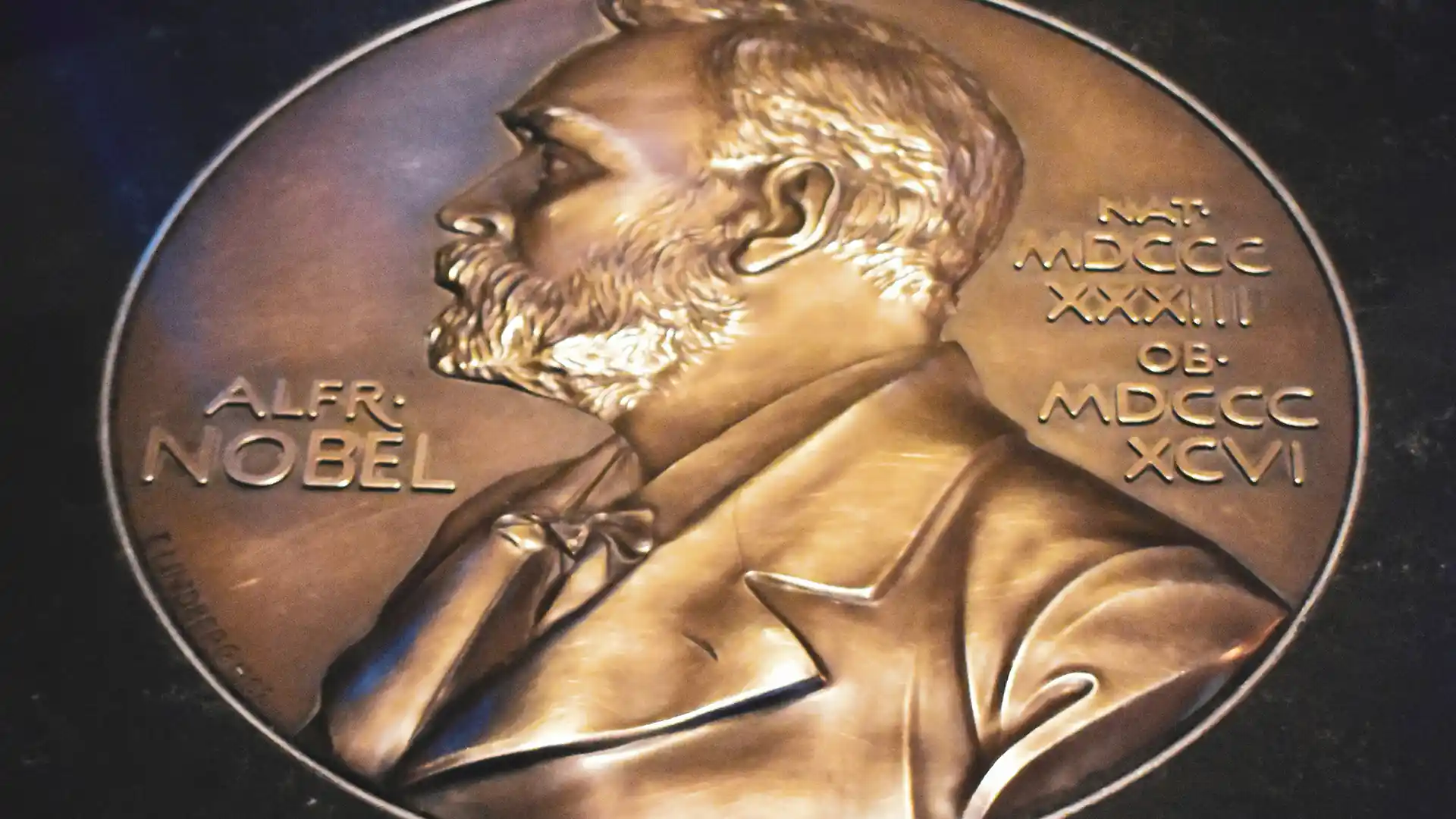
Nobel Prizes for Science and Medicine have been awarded since 1901. In this workshop, participants will explore the winners in four categories: Physiology or Medicine, Chemistry, Physics and the additional Sveriges Riksbank Prize in Economic Sciences (in Memory of Alfred Nobel).
Participants will delve into what the Laureates discovered and what the impact of the discovery has been. They will also be inspired by numerous heroic stories of the winners and the obstacles they faced in their journey. Many of the discoveries are nothing short of amazing—the discovery of immunotherapy for cancer by James Allison and Tasuku Honjo, 2018 Prize for Physiology or Medicine, has saved countless lives.
This is only one of many life-saving treatments for everything from diptheria (1901, Emil Von Behring) to malaria (Tu Youyou, 2015) and diabetes (1923, Canada’s Banting and Macleod) and so many more. In 2024, Canada’s Geoffrey Hinton known as the ‘Godfather of AI’, won the Nobel Prize in Physics for his work on artificial neural networks.
And in 2023, as the world was battling the Covid-19 pandemic, Katalin Kariko and Drew Weissman won the Nobel Prize for Physiology or Medicine for their discovery that enabled the development of mRNA vaccines against the virus. Delving into their lives, what drove them to their discoveries, is what makes this workshop worthwhile.
There are many topics to choose from—for medicine alone the Prize has been awarded 115 times. In total there have been 749 Nobel Prize winners for the science and medicine categories! Regardless of your background, this workshop will provide the opportunity to discuss groundbreaking discoveries and ensure valuable insights—it will also be lots of fun.
Facilitators
Priscilla Platt is a retired lawyer who practised law in Ontario for close to 40 years. Despite this background, she has had a lifelong fascination with science. She has been with the Academy for many years and has co-facilitated several workshops.
Judith Kennedy has been a member of the Academy since 2012 and participated in the life of the Academy in various positions.
In her previous life, she worked as a disability case manager assisting individuals through the rehabilitation process and helping to establish return to work programs. For several years, she taught courses on Disability Case Management in the York Seneca Rehabilitation Program.
As explained in the Nobel Prize website (www.nobelprize.org), in 1895, in the last will and testament of Alfred Nobel, the inventor, entrepreneur, scientist and businessman left the bulk of his fortune to be used for prizes in physics, chemistry, physiology or medicine, literature and peace to ‘those who, during the preceding year, shall have conferred the greatest benefit to humankind.’
In this Workshop we will delve into the Nobel laureates who have ‘conferred the greatest benefit to humankind’ in the fields of science (Physics and Chemistry, including Economic Sciences) and in Physiology or Medicine. The Nobel Prize website has a wealth of information, not only about Alfred Nobel, and the winners of the prizes since its inception in 1901, but also educational resources that explain the discoveries, a Toolkit for Scientific Thinking, and challenging games as well as lessons that explain scientific findings.
We will explore the winners for Physics, Chemistry and Physiology or Medicine, including the Sveriges Riksbank Prize in Economic Sciences (since 1969 in memory of Alfred Nobel) and their impact. Participants may choose from among 401 prizes awarded for Physics, Chemistry, Medicine or Physiology and the Economic Sciences from 1901 to 2023 as well as from other topics of interest as noted in the Nobel Prize website as presentation topics.
That’s not all—there is a wealth of information about the Nobel Prize winners available through a simple google search. For example, in 2023, Katalin Kariko and Drew Weissman won the Prize for Physiology or Medicine for their discoveries ‘concerning nucleoside base modifications that enable the development of effective mRNA vaccines against COVID-19’. In the same year, Katalin Kariko also published a memoir called ‘Breaking Through: My Life in Science’—to great acclaim. This book may be the basis of a presentation.
Much has been written about Albert Einstein, who won the Nobel Prize for Physics in 1921—his discoveries and his life’s work would be worthy of several presentations. Similarly, Marie and Pierre Curie won the prize in 1903 for Physics for their study into spontaneous radiation. Subsequently, in 1911, Marie Curie was awarded the Nobel Prize for Chemistry in recognition of her work in radioactivity—the first to get that recognition twice! Their daughter, Irene Joliot-Curie won the Nobel Prize in Chemistry in 1935 (with her husband) for work on the synthesis of new radioactive elements. Their other daughter Eve Curie, in 1937, wrote the first of many biographies of her mother ‘Madame Curie’, which was later made into a film.
In addition, James P. Allison, who (with Tasuku Honjo) won the Nobel Prize for Physiology or Medicine in 2018 for the development of immunotherapy to treat cancer, was the subject of an excellent documentary ‘Jim Allison: Breakthrough’—it is available on TVO documentaries and may also be the subject of a presentation.